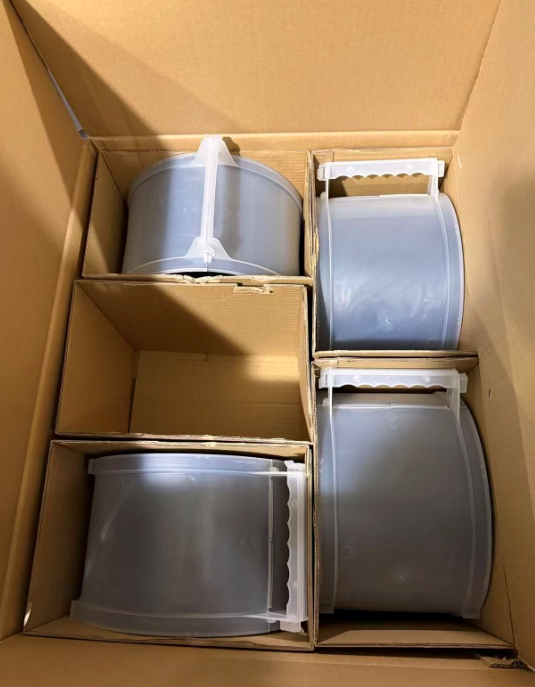
In the global optical fiber market, fibers are commonly categorized into four quality grades based on material origin, testing standards, and application reliability. Understanding these grades is critical when selecting fiber for telecom, industrial and FPV drone applications.
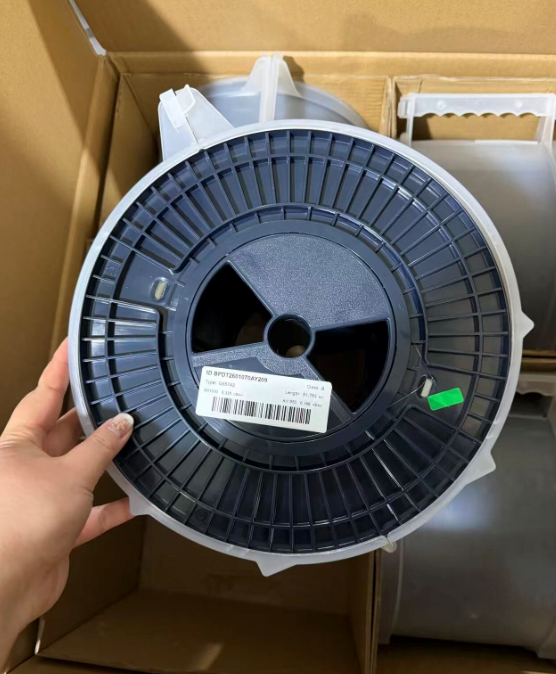
Grade A Optical Fiber (Grade A / Telecom Grade)
The highest quality level, widely used in carrier-grade, FPV drone, and industrial projects.
Mandatory Requirements:
*Original manufacturer bare fiber (e.g. Corning / YOFC / Prysmian, etc.)
*Full-length OTDR test report
*Insertion Loss (IL) & Return Loss (RL) tests passed
*Tensile strength test report (Tensile Test)
*Strict attenuation compliance
SM G.657A2: ≤ 0.31 dB/km @1310 nm ≤ 0.18 dB/km @1550 nm
*No splicing, no repair, no abnormal event points
Typical Applications:
*Fiber spools / tethered fiber systems
*FPV fiber-optic drones
*Long-distance transmission
*High-reliability missions, competitions, and engineering projects
Grade B Optical Fiber (Grade B / Engineering Grade)
Performance close to Grade A, with slightly reduced testing scope.
Key Characteristics:
* Original manufacturer fiber
* OTDR test passed (a very small number of non-critical event points may be allowed)
* Slightly higher attenuation, still within acceptable operating range
* Full tensile test reports are usually not provided
Typical Applications:
*Engineering cabling
*Medium-distance transmission
*Cost-sensitive projects that still require stable performance
Grade C Optical Fiber (Grade C / Commercial Grade)
Usable, but not suitable for high-reliability applications
Not recommended for fiber spools or FPV drone systems
Characteristics:
*May consist of leftover inventory or unpacked reels
*No complete OTDR documentation
*Possible micro-bending or localized high-loss sections
*Poor batch-to-batch consistency
Typical Applications:
*Short distance links
*Testing or demonstration purposes
*Non-critical communication systems
Grade D Optical Fiber (Non-standard / Recycled Fiber)
High-risk and non-compliant quality level
Common Issues:
*Non-original or unknown fiber sources
*No test data or quality documentation
*Recycled or re-wound fiber
*Uncontrollable attenuation, mechanical strength, and service life
Commonly found in low-price markets
Not suitable for any application requiring stability or reliability
Summary
Selecting the correct optical fiber grade is essential for ensuring performance, safety, and long-term reliability. For FPV drones, fiber spools, telecom infrastructure, and mission-critical systems, Grade A optical fiber is strongly recommended.